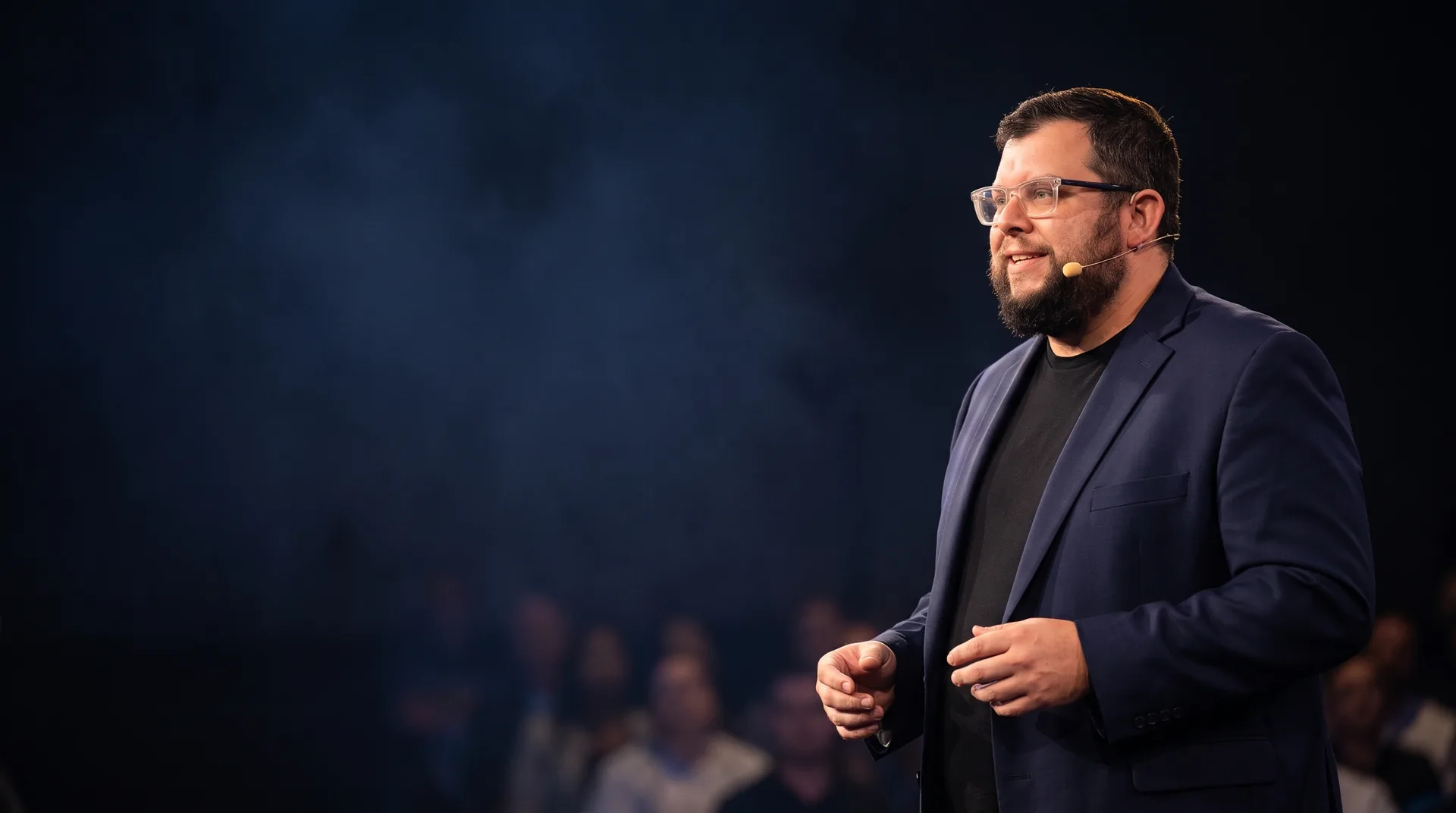
Talk it through with the fractional CMO who runs it.
See if Mark has availability for a callFree. 30 minutes. With Mark, not a salesperson.
A fractional CMO is an executive who owns marketing strategy and drives execution -- accountable for pipeline, revenue contribution, and team performance, operating as a member of your leadership team. A marketing consultant is a specialist hired to advise on a specific problem or project, without ongoing ownership of results or leadership responsibility over your marketing team. The critical difference: a fractional CMO is accountable to pipeline and revenue outcomes, meets weekly with your leadership team, and manages your marketing staff -- a consultant delivers a report or recommendation and moves on, leaving implementation to whoever is available.
Comparing options? The main fractional CMO guide sets out what the role owns in the first 90 days, what it costs against the published market, and the questions to ask any provider before you sign.
The fractional CMO model is replacing the marketing consultant retainer at the $1M to $30M revenue stage for a simple reason: companies at this stage don't need advice -- they need leadership, execution, and accountability. The demand for senior marketing leadership has never been higher, and the cost of getting it wrong has never been steeper. Yet most growth-stage companies face the same impossible math: a full-time Chief Marketing Officer costs $280,000 to $450,000 in year one including salary, benefits, equity, and recruiting fees, but the company is not yet at the scale to justify it.
A Fractional CMO solves this precisely. You get the same strategic capability -- go-to-market strategy, ICP definition, brand positioning, demand generation architecture, pipeline systems, and team leadership -- at $2,500 to $50,000 per month. The $150,000 to $300,000 in annual savings goes directly into paid media, content, product, or your next hire. For companies between $500K and $20M in revenue, this is the highest-ROI marketing investment available.
📊 Research & Evidence
Find out what your first 90 days would look like.
Start here, free →Free, no obligation. If it's a fit, you'll pick a time to talk with Mark directly.This is not advisory. This is not a slide deck and a handshake. A fractional CMO engagement with MarkCMO means a working operator embedded in your business, owning your marketing function, managing your team and agency relationships, and accountable to the same pipeline and revenue KPIs a full-time CMO would own.
The US B2B market is anchored by SaaS, Healthcare, Manufacturing, and Professional Services -- each vertical carrying its own marketing complexity: regulatory constraints in healthcare, long enterprise sales cycles in B2B tech, intense price competition in logistics, and procurement-committee dynamics in manufacturing. A fractional CMO who has operated across all of these verticals accelerates results by months compared to a consultant who needs a full engagement to understand your buyers -- and then exits before seeing whether the strategy worked.
The US has 6M+ employer businesses and a growing demand for fractional executive leadership. That market scale creates both opportunity and competitive intensity -- the companies that invest in marketing execution and accountability compound their advantages, while those that defer the decision fall further behind. Mark Gabrielli is the fractional CMO companies choose when they are ready to move from advice to action.
Fractional CMO services for B2B SaaS companies : ICP definition, demand generation strategy, and revenue-tied marketing execution built for the specific buyer dynamics of your market.
See B2B SaaS work →Fractional CMO services for Healthcare companies : ICP definition, demand generation strategy, and revenue-tied marketing execution built for the specific buyer dynamics of your market.
See Healthcare work →Fractional CMO services for Manufacturing companies : ICP definition, demand generation strategy, and revenue-tied marketing execution built for the specific buyer dynamics of your market.
See Manufacturing work →Fractional CMO services for Professional Services companies : ICP definition, demand generation strategy, and revenue-tied marketing execution built for the specific buyer dynamics of your market.
See Professional Services work →Learn more about hiring a fractional CMO
| Option | Monthly Cost | Strategic Leadership | Execution | Accountability | Time to Results |
|---|---|---|---|---|---|
| Fractional CMO (MarkCMO) | $8K -- $20K/mo | ✅ Full C-suite | ✅ Manages team & agencies | ✅ Revenue KPIs | ✅ 30-60 days |
| Full-Time CMO | $23K -- $42K/mo + equity | ✅ Full C-suite | ✅ Full ownership | ✅ Revenue KPIs | ❌ 6-12 month ramp |
| Marketing Agency | $8K -- $25K/mo | ❌ Tactical only | ✅ Campaign execution | ❌ Deliverable-based | 🟡 60-90 days |
| Marketing Consultant | $5K -- $20K/project | 🟡 Strategy only | ❌ No execution | ❌ Deliverable-based | ❌ You execute |
| VP of Marketing Hire | $15K -- $22K/mo + equity | 🟡 Director-level | ✅ Partial ownership | 🟡 Partial KPIs | ❌ 3-6 month ramp |
Every MarkCMO engagement follows a structured 90-day framework designed to deliver measurable results fast while building the marketing system that compounds for years. There is no six-month discovery phase. No ramp time. You see results in the first 30 days.
Full marketing audit across all channels, spend, and assets. Customer interviews to define your real ICP and buying triggers. Competitive positioning workshop. A prioritized 90-day marketing roadmap with clear KPIs tied to pipeline and revenue -- not vanity metrics.
Launch or rebuild three core demand generation channels. Publish the first content assets targeting your ICP. Build email nurture sequences for every stage of the buyer journey. Configure CRM attribution so every lead has a source and every deal has a marketing touchpoint. Establish sales-marketing SLAs and weekly pipeline reviews.
Double down on the channels performing above benchmark. Kill what is not working and reinvest that budget. Introduce a fourth channel. Present the 12-month marketing roadmap with OKRs tied to pipeline velocity, CAC payback, and revenue growth. Deliver the board report that shows marketing as a revenue driver.
Every engagement includes weekly leadership check-ins, monthly board-ready reporting, and a marketing system designed to produce pipeline independently of ongoing fractional oversight -- because the goal is never dependency, it is transformation.
The single biggest mistake growth-stage companies make is hiring a marketing team before they have a marketing strategy. Execution without strategy is expensive noise.
Mark Gabrielli is a Fractional CMO and COO with 19+ ventures across 12 industries and $50M+ in revenue built. He is not a consultant who delivers a slide deck and disappears. He is a working operator -- the kind of senior marketing leader who sits in your weekly leadership meeting, manages your team, runs your agency relationships, and stays until the results are real, repeatable, and yours to keep.
Mark serves growth-stage B2B companies nationwide across all 50 states, with deep experience across healthcare, SaaS, aerospace, manufacturing, fintech, logistics, and professional services -- from pre-revenue startups to $50M+ businesses preparing for exit or Series B raises.
Learn more: About Mark | Results and Case Studies | Fractional CMO Services | How to Measure Fractional CMO ROI
From first call to compounding results -- here is exactly what the engagement looks like.
Book a 30-minute strategy call at no cost. We audit your current marketing, revenue gaps, team structure, and the single biggest lever holding back your growth. You leave with a clear diagnosis before spending a dollar.
We deliver your full GTM strategy, ICP definition, competitive positioning, messaging architecture, and a 90-day demand generation plan. Every deliverable is board-presentable and execution-ready from day one.
Campaigns go live. We manage your marketing team, agencies, and freelancers with clear KPIs at every level. Outbound sequences launch. Pipeline starts building. You get weekly check-ins and monthly board-ready reports.
Systems compound. Revenue attribution is wired to real numbers. The marketing engine runs without you managing every detail. You stay because the results justify it -- not because you are locked in.
How fractional executive leadership stacks up against every other option on the table.
| Factor | MarkCMO Fractional CMO |
Full-Time CMO In-House Hire |
Marketing Agency Retainer Model |
Consultant Independent |
|---|---|---|---|---|
| Monthly Cost | $2.5K-$50K (most $8K-$15K) | $22K-$38K+ (salary + benefits + equity) | $8K-$30K (narrow scope) | $5K-$20K (advice only) |
| Time to Start | 5-7 business days | 3-6 months recruiting | 2-4 weeks onboarding | 1-2 weeks |
| C-Suite Accountability | Full revenue ownership | Full revenue ownership | Channel-level only | Advice, no accountability |
| Commitment Required | Month-to-month | 12-24 month salary commitment | 3-12 month retainer | Variable, project-based |
| Board-Ready Reporting | Included every engagement | Depends on hire quality | Rarely included | Not standard |
| Team + Agency Leadership | Full C-suite management | Full C-suite management | Self-directed only | Not included |
| Revenue Attribution | Built-in pipeline dashboards | Varies by hire | Rarely available | Not standard |
| Risk if Underperforms | Cancel any time, zero fees | Severance + equity + legal | Contract lock-in | Project walk-away |
| First Results | 30 days (strategy + plan) | 90-180 days (ramp time) | 60-90 days (campaign build) | 30 days (doc delivery) |
Written by Mark Gabrielli, reviewed 2026-11-09.
A marketing consultant fits a company with a bounded question, such as an audit, a pricing review or a launch plan, and a team that can carry out the answer on its own. A fractional CMO fits a company that needs someone to own the marketing plan, make the ongoing calls and be accountable for the results month after month.
| Marketing consultant | Fractional CMO | |
|---|---|---|
| What you buy | Advice and a deliverable, such as a plan, audit or report | Ongoing leadership of marketing |
| Typical length | A project with an end date | Open ended; it continues while it pays off |
| Who executes | Your team, after the handover | Your team and vendors, directed by the fractional CMO |
| Accountable for | The quality of the recommendation | Whether the plan produces results |
| Pricing shape | A project fee, day rate or hourly rate | A monthly fee; at MarkCMO $2,500 to $50,000, most $8,000 to $15,000 |
| Best fit | A clear question and the capacity to act on the answer | No owner for marketing, or a plan that never gets carried out |
If you are weighing a fractional CMO against a talent marketplace or a firm instead, see MarkCMO vs MarketerHire, MarkCMO vs GrowTal and MarkCMO vs Chief Outsiders, which quote each company's own site.
Per month, often yes, because a fractional CMO is an ongoing engagement while a consultant is usually paid per project, day or hour. At MarkCMO a fractional CMO costs $2,500 to $50,000 a month, with most clients at $8,000 to $15,000. The fairer comparison is total cost against what gets done: a consultant's plan that nobody carries out costs less but returns nothing, while a project with a strong internal team behind it can be the cheaper, better choice.
Yes, and it is a sensible order when you are unsure what the problem is. A short consulting project or audit can show whether the gap is a missing plan, weak execution or one channel. If the finding is that nobody owns marketing, that is when a fractional CMO makes sense. If the finding is one weak channel, a specialist or agency may be enough, and the six-question check at markcmo.com/which-marketing-leader-do-i-need follows the same logic.
Yes. A fractional CMO writes the plan, but the difference from a consultant is what happens next: the fractional CMO stays to run it, change it when the numbers say so, and answer for the result. At MarkCMO, Mark Gabrielli runs every account himself, works month to month and targets first results within 30 days, so the strategy and the person accountable for it are the same.
Related reading: published prices from 49 providers in the Fractional CMO Price Index, what drives the price in how much a fractional CMO costs, the unranked field in fractional CMO companies compared, short answers on fractional CMO questions, answered, and a six-question check, agency, fractional CMO or full-time CMO, that will tell you when the answer is not a fractional CMO.
The central difference between a fractional CMO and a marketing consultant is the line between advising and doing, and it determines which one actually solves a company's problem. Both bring expertise, but a consultant typically hands you a recommendation and leaves the execution to you, while a fractional CMO stays to lead the doing and owns the result. Understanding this divide is the key to choosing correctly, because a company that needs execution will be underserved by advice, however good.
A marketing consultant's job typically ends with the recommendation: they analyse your situation, produce a strategy or a set of findings, and hand it over for you to implement. This is genuinely valuable when a company has the leadership and capacity to execute a plan but lacks the specific expertise to create it. The limitation appears when the company cannot execute the recommendation on its own, which is common, because the plan then sits unimplemented, and the value of even excellent advice is lost. The consultant has done their job, but the company's problem remains unsolved.
A fractional CMO's job begins roughly where a consultant's ends, because they do not just produce the plan but stay to lead its execution, make the ongoing decisions, and own whether it works. This is the difference between receiving a strategy and having a leader who implements it, adjusts it as reality unfolds, and is accountable for the outcome. For a company that needs the marketing actually led and done rather than merely advised, the fractional CMO provides the continuity of leadership that a consultant, by design, does not, which is why the two suit fundamentally different needs.
A marketing plan that is never properly executed helps almost no one, and companies that lack the leadership to implement a consultant's recommendations often end up exactly there, with a sound strategy and no results. The value of marketing lives in the execution, not the plan, and a company without the capacity to execute needs someone to lead the doing, not another document. This is the most common way consulting engagements disappoint: not because the advice was wrong but because the company could not act on it, which is precisely the gap a fractional CMO is built to fill.
What a consultant delivers is fundamentally a recommendation, a report, a strategy, an analysis, that represents their expert judgement about what you should do. This deliverable is complete when it is handed over, and its quality is judged by whether the thinking is sound. For a company that needs expert thinking and can act on it, this is exactly the right deliverable. The catch is that a recommendation is a starting point for results, not the results themselves, and its value is fully realised only if the company can turn it into action, which many cannot.
What a fractional CMO delivers is not a document but an outcome: a marketing function that works, decisions made and implemented, results produced, and a team led. The deliverable is the working marketing itself, judged by whether the business actually improved, not by whether a report was well argued. This is a fundamentally different kind of value, and it suits a company that needs its marketing led to results rather than advised on. The distinction between delivering a recommendation and delivering an outcome is the clearest way to understand which of the two roles a company actually needs.
The reason the deliverable differs so much comes down to ownership: a consultant owns the quality of their advice, while a fractional CMO owns the quality of the result. This changes the entire relationship, because a leader accountable for the outcome cannot hand over a plan and walk away; they must see it through, adjust when it does not work, and answer for whether the marketing succeeds. Ownership of the result, rather than the recommendation, is what makes a fractional CMO a leader rather than an advisor, and it is the single most important thing a company buying help should be clear about wanting or not wanting.
A marketing consultant is the right choice when a company has capable marketing leadership and execution capacity but needs specific expertise it lacks, such as deep knowledge of a particular channel, market, or problem. In this situation the company can act on advice, so the highest-value help is exactly that: expert input that its existing leadership implements. Paying for a fractional CMO here would be buying leadership the company already has, when what it needed was a targeted injection of expertise. When the gap is knowledge rather than leadership, a consultant fits precisely.
A consultant suits a well-defined, bounded problem, a specific question to answer, a particular strategy to develop, a discrete analysis to perform, where the work has a clear beginning and end. For these engagements, the recommendation deliverable is appropriate, and the ongoing leadership of a fractional CMO would be more than the problem requires. When a company knows exactly what expert question it needs answered and can act on the answer, a consultant delivers that answer efficiently, whereas a fractional CMO is suited to open-ended leadership of a whole function rather than a single bounded problem.
The decisive test for choosing a consultant is whether the company can genuinely execute the recommendation itself, because a consultant's value depends entirely on that capacity. A company with the leadership and resources to implement a strategy gets full value from expert advice, while one without that capacity gets a plan it cannot use. Being honest about whether you can actually execute what a consultant recommends is the key judgement, and if the honest answer is no, the company needs a fractional CMO to lead the execution rather than a consultant to recommend it.
When your company has marketing leadership and execution capacity but needs specific expertise, and can genuinely act on a recommendation, a consultant is the efficient choice, delivering expert input your existing team implements. The value of the consultant is in the thinking, and it is fully realised because you can turn it into action. Choosing a fractional CMO in this situation would mean paying for leadership you already have, so when the gap is expertise and the capacity to execute is present, a consultant fits the need precisely and cost-effectively.
When your company needs the marketing actually led, decisions made and implemented, and the outcome owned, rather than a recommendation to act on yourself, a fractional CMO is the right choice, because they stay to do the leading a consultant leaves to you. If you lack the capacity or leadership to execute a plan, advice alone will not solve the problem, and a leader who owns the result is what the situation requires. When the need is for marketing to be led to results rather than advised on, the fractional CMO is the correct choice.
When a company is genuinely unsure what it needs, a bounded consulting engagement can sometimes clarify the problem before committing to ongoing leadership, functioning as a diagnostic that reveals whether the deeper need is expertise or execution. This is not always necessary, since a good fractional CMO diagnoses as part of their engagement, but for a company hesitant to commit, a focused consulting piece can be a lower-commitment way to understand the situation. The key is to treat it as a step toward clarity rather than a substitute for the leadership the company may ultimately need.
Not quite; the difference is not merely duration but the nature of the role, since a fractional CMO leads and owns the outcome while a consultant advises and owns the recommendation, even if both are engaged over time. A consultant on a long engagement is still fundamentally advising, whereas a fractional CMO is fundamentally leading, making and implementing decisions and answering for results. The distinction is one of role and accountability rather than length, and understanding it prevents the common mistake of expecting leadership from what is actually an advisory relationship, however extended.
Some consultants offer implementation support, but this often blurs into the fractional CMO role, and the key question remains whether they are truly owning the outcome and leading the execution or merely helping the company act on advice. A consultant who genuinely takes ownership of leading the marketing to results is effectively functioning as a fractional CMO, whatever the label. What matters is not the title but whether someone is accountable for the result and leading the doing, so a company should look past the words to the actual accountability and role being offered.
It depends on the scope and duration, since a consultant on a bounded project may cost less than an ongoing fractional CMO engagement, but they deliver different things: a recommendation versus led results. Comparing the two on price alone misses that a cheaper consulting engagement leaves execution to the company, which has its own cost if the company cannot execute well. The relevant comparison is the total cost of getting to actual results, and for a company that cannot implement advice on its own, the seemingly cheaper consultant may cost more in the end through a plan that never produces results.
If you genuinely need only a strategy and have the leadership and capacity to execute it, a consultant is the appropriate choice, delivering the strategy for your team to implement. The honest test is whether you can actually execute the strategy once you have it, because a strategy you cannot implement solves nothing. Many companies believe they need only a strategy and discover they also lack the leadership to execute it, at which point a fractional CMO becomes the real need. If you are confident in your execution capacity, a consultant suits a strategy-only need well.
Yes, a fractional CMO produces strategy as part of their work, but the strategy is the beginning of what they do rather than the deliverable itself, because they stay to implement it and own the results. The difference from a consultant is that the strategy is not handed over and left; it is led into execution and adjusted as reality unfolds. So a company working with a fractional CMO gets the strategic thinking a consultant would provide, plus the leadership to turn it into results, which is why the fractional CMO deliverable is an outcome rather than a document.
Ask honestly whether, once you know what to do, you have the leadership and capacity to do it well, because if the answer is yes you need advice and if the answer is no you need execution led. Companies often assume they need advice when their real gap is the leadership to execute, which is why so many consulting recommendations go unimplemented. The clearest signal is your track record: if past strategies have stalled in execution, your need is a leader who owns the doing, which is a fractional CMO, not another recommendation, which is a consultant.
They can, with a fractional CMO leading the marketing and bringing in a consultant for deep expertise on a specific problem the CMO wants specialist input on. In this arrangement the fractional CMO owns the outcome and the consultant provides targeted expertise the leader then implements, combining leadership with specialist depth. This mirrors how a fractional CMO works with agencies, directing specialist help toward the marketing they lead. Rather than competing, the two roles can complement each other when a company has ongoing leadership needs and occasional needs for bounded expert input.
The most common mistake is hiring a consultant when the real need is execution, so the company receives a sound recommendation it cannot implement and concludes, wrongly, that the advice failed. The advice may have been excellent; the problem was that the company needed the marketing led, not advised. Diagnosing honestly whether the gap is expertise or execution before choosing prevents this expensive misfire, and when the honest answer is that the company cannot execute on its own, a fractional CMO who leads to results is the choice that actually solves the problem.
Both titles are easy to claim, so the useful test is what each person can show you before the engagement starts. A short set of questions, asked the same way to every candidate, separates the experienced from the merely confident, and the good answers differ depending on which role you are hiring.
| Question to ask | A strong consultant answer | A strong fractional CMO answer |
|---|---|---|
| What exactly will I have at the end? | A named deliverable with a date, such as a positioning document or a channel plan, and what you will need to act on it | Decisions made, a team or vendors working to a plan, and the measures they will be reporting against |
| Who does the work? | The consultant you are speaking with, with any junior help named up front | The fractional CMO leads, and states which work goes to your staff, contractors or agencies |
| Can I speak with a past client like us? | A client with a similar problem who acted on the recommendation | A client at a similar stage who can describe what changed while the CMO was in the seat |
| What would make this fail? | A specific answer, such as nobody in-house being able to execute the plan | A specific answer, such as the CEO not giving the role real authority over budget and priorities |
| How do we end it? | The project ends at delivery, with any follow-up support priced separately | A notice period, a handoff of every document and account, and help hiring a successor if one is needed |
Be wary of guaranteed results, since nobody controls your market. Watch for references who cannot describe what the person actually did, a proposal that never mentions your numbers, and contracts that lock you in long before anyone has shown progress. Ask who owns the work product, the accounts and the data when the engagement ends; the answer should be you. The guide to hiring a fractional CMO goes deeper on interviews, and the agency comparison covers the third option many companies weigh.
Ask what you will have at the end, who will actually do the work, and whether you can speak with a past client in a similar situation. Ask what would make the engagement fail, and listen for a specific answer rather than reassurance. Ask how it ends: notice, handoff of documents and accounts, and who owns the work product. A consultant should name a deliverable and a date. A fractional CMO should describe decisions and results they will own.
A marketing consultant advises and hands over a plan or report for your team to carry out. A fractional CMO owns the plan on an ongoing basis, directs the work and is accountable for the result. MarkCMO is a fractional CMO: $2,500 to $50,000 a month, most clients $8,000 to $15,000, month to month, and Mark Gabrielli runs every account himself.
Reviewed by Mark Gabrielli, fractional CMO. Last verified November 2026.
Book a free 30-minute strategy call with Mark Gabrielli or call 321-917-5738. You will get a straight diagnosis and the one or two things to fix first, whether or not we work together.
Book a free 30-minute call with Mark. You will walk away with a clear, honest diagnosis and the one or two things to fix first, whether or not we work together.
Book a free strategy call →Every MarkCMO engagement is structured to protect you. You stay because the results are compounding -- not because you are locked in. Cancel any time. No fees, no questions.
No hidden scope. No surprise invoices. Every MarkCMO engagement includes the full fractional CMO capability stack from day one.
Full go-to-market strategy, ideal customer profile definition, competitive positioning, and messaging architecture tailored to your market.
Multi-channel pipeline engine -- SEO, content marketing, paid media, email nurture, and outbound -- built as compounding systems, not one-off campaigns.
C-suite management of your marketing team, agency partners, and freelancers with clear accountability and performance benchmarks at every level.
Weekly leadership check-ins, monthly board-ready pipeline reports, and revenue attribution dashboards that replace gut feeling with data.
CRM configuration, attribution modeling, marketing technology optimization, and performance dashboards wired directly to revenue KPIs.
No long-term contracts. No cancellation fees. Engage for as long as it drives results -- exit any time with zero friction.
Every MarkCMO engagement is structured to protect you. You stay because the results are compounding -- not because you are locked in.
Book a free 30-minute strategy call. No pitch deck. No sales pressure. An honest conversation about your market position, your current marketing, and exactly what it would take to build pipeline this quarter.
Month-to-month. No contracts. First results in 30 days. Serving all 50 US states nationwide. [email protected]
30 minutes with Mark Gabrielli. No pitch. A direct read on your biggest marketing gaps and what moves revenue fastest. Responds personally within 24 hours.
60 seconds. Mark responds personally within 24 hours.
Mark will personally follow up within 24 hours.
Or reach him directly: [email protected] · +1 (321) 917-5738
In 30 minutes I will pressure test your growth, name the two or three levers actually moving your revenue, and tell you honestly whether a fractional CMO is the right move right now. No deck, no pitch. If we are not a fit, I will point you to who is.
Start with the CMO Engine at $33 per month instead.
Free, and genuinely no pitch. If it is not a fit, you will still leave with a clear next step.
Free. 30 minutes. With Mark, not a salesperson.