Fractional CMO in South Dakota: Building a National Pipeline From a Small Home Market
You have already sold to most of the people in South Dakota who will ever buy from you, and the next customer is in Denver, Dallas or New York, where nobody knows your name. A fractional CMO gives you one senior marketer who picks those markets, builds the proof and runs the pipeline, without opening an office out of state, with first results targeted in 30 days. South Dakota has fewer than a million residents, which means a growing company here runs out of local customers early. The trust company in Sioux Falls serves families in California and New York. The precision ag firm in Brookings sells to growers across the Corn Belt. The Rapid City supplier wants work on the B-21 program at Ellsworth and beyond. For each of them the real market is out of state, and marketing has to reach buyers who have never been here.
Hiring a fractional CMO in South Dakota through MarkCMO costs $2,500 to $50,000 per month, with most engagements between $8,000 and $15,000, compared with $280,000 to $450,000 a year in salary, bonus and benefits for a full-time CMO. It is month to month, Mark Gabrielli runs every account himself, and the work is built for companies that have outgrown the in-state market and need a repeatable way to win customers in other states without opening offices there.
Where South Dakota companies actually sell
| Sector | Home base | Where the customers are |
|---|---|---|
| Trust and wealth services | Sioux Falls, Rapid City | Families and advisors on both coasts |
| Card and consumer banking operations | Sioux Falls | National consumer base, run through partner brands |
| Ag tech and biofuels | Sioux Falls, Brookings | Growers, co-ops, and ethanol plants across the Midwest |
| Manufacturing and electronics | Brookings, Watertown, Mitchell | Stadiums, transit agencies, OEMs nationwide |
| Health care services | Sioux Falls | Patients and partners in a five-state region |
| Tourism and hospitality | Black Hills, Deadwood | Road trippers from every state, plus rally crowds |
Trust companies and the out-of-state referral
South Dakota's trust laws drew dozens of independent trust companies to Sioux Falls and Rapid City, and their clients almost never live in the state. The person who brings the business is usually an estate attorney, a wealth advisor, or a family office in another city. That makes marketing a referral program, not an advertising one. It means a clear explanation of why South Dakota situs matters for that advisor's client, content written for professionals rather than consumers, a short list of target firms in each major market, and a disciplined way of staying in touch after the first conversation. Because the subject is regulated and sensitive, every claim needs review before it goes out.
Ag tech, ethanol, and the Brookings engineers
POET, one of the largest ethanol producers in the world, is based in Sioux Falls. Raven Industries grew up in Sioux Falls before CNH acquired it, Daktronics builds scoreboards and displays in Brookings, and South Dakota State University keeps a steady supply of engineers and agronomists in the region. The spinouts and suppliers around them tend to have excellent products and thin go-to-market plans. Selling to growers runs on dealers, field days, agronomist trust, and a calendar set by planting and harvest. A fractional CMO plans campaigns around that calendar instead of a fiscal quarter.
Health care and the Black Hills economy
Sanford Health and Avera Health, both headquartered in Sioux Falls, make the city a regional medical center for the Dakotas, Minnesota, Iowa, and Nebraska, and they support a ring of vendors in staffing, software, and specialty services. Across the state, the Black Hills run on a different rhythm: Mount Rushmore, Custer State Park, Deadwood, and the Sturgis rally bring millions of visitors who book months ahead or decide on the road. Hospitality marketing there is about search visibility, reviews, and filling the shoulder seasons.
Signs a South Dakota company has outgrown founder-led marketing
In a state this size, the owner usually knows every serious buyer by name, and that is how the company grew. The trouble starts when the next million in revenue has to come from people who do not know anyone in Sioux Falls. The usual signs:
- The home market is tapped out. Growth in the state has slowed to a trickle, and the first out of state customers came by luck, not by plan.
- Referrals come from a few people. Two attorneys, one dealer or a single regional partner send most of the new business, and nobody is building the next ten.
- The pitch assumes the buyer knows South Dakota. A family office in California or a grower in Illinois needs the case made from scratch, with proof they can check.
- Trade shows produce badges, not deals. The booth is busy, and three months later nothing traces back to it.
- The marketing leader search keeps stalling. Few senior marketers live in the state, and the ones in Minneapolis or Denver do not want to move.
A fractional CMO fixes ownership first. One senior person chooses the out of state markets and buyer types, builds the proof and the target lists, and runs the plan every week with your team.
South Dakota programs that help, and the marketing question each leaves open
South Dakota backs growing companies with several public programs. None of them writes your story or fills your pipeline, but each is worth using next to a marketing plan.
| Program | What it does | The marketing question it leaves |
|---|---|---|
| Governor's Office of Economic Development | Recruits companies to the state and runs grant, loan and workforce programs | Once you are funded to grow, who are the buyers in other states and how do they find you? |
| South Dakota SBDC | Free advising and training for small businesses through offices around the state | Who runs the plan every week after the advising session? |
| South Dakota Manufacturing and Technology Solutions | The state's manufacturing extension partnership, helping plants improve operations and grow | Once capacity is freed up, which new customers fill it? |
| South Dakota APEX Accelerator | Help preparing for federal, state and local government contracts, including work tied to Ellsworth | Once you are registered and eligible, why would a buyer choose you? |
| South Dakota Department of Tourism | Markets the state, the Black Hills and Mount Rushmore to travelers nationwide | When the visitor arrives, why do they book with you instead of the place next door? |
The South Dakota selling calendar
South Dakota buying runs on farm, hunting and travel seasons, and a plan that ignores them spends in the wrong months. Spring planting and fall harvest decide when growers, co-ops and ethanol plants will talk, so ag campaigns land in winter and after harvest, and summer farm shows such as Dakotafest in Mitchell are where many dealer relationships start. The pheasant season opener in October fills hotels, restaurants and lodges east of the Missouri. In the Black Hills, the visitor season runs from Memorial Day to Labor Day, with the Sturgis rally in August as its peak, and the Black Hills Stock Show brings ranchers to Rapid City each winter. The legislature meets in Pierre each winter and shapes state budgets and contracts. For trust companies, the busy stretch follows the advisor's calendar, with estate planning conversations crowding into the last months of the year. Budgets should go out before each peak, and the slow months should be used to build content, proof and search presence.
The first 30 days
Every engagement is month to month and Mark Gabrielli runs it himself, drawing on 15 years of marketing leadership. For a South Dakota company, the first month usually covers four things:
- Choose the markets outside the state. Pick the two or three states and the buyer types where the company can win soonest, instead of trying to reach the whole country.
- Build the target list. Name the advisors, dealers, agencies or accounts in each market, and the referral partners who already talk to them.
- Make the proof travel. Put results, credentials and clear explanations on the pages and documents a stranger in another state will see first.
- Set the weekly rhythm. Agree on outreach, follow up and the few numbers that show whether the new markets are moving.
First results are targeted inside those 30 days, and the free 30-minute call is where the first list of target markets gets drafted.
What it costs in South Dakota
| Option | Typical cost | Fits best when |
|---|---|---|
| Fractional CMO | $2,500 to $50,000/mo (most $8,000 to $15,000) | Growth depends on customers outside the state |
| Full-time CMO (total comp) | $280,000 to $450,000/yr | A marketing team of several people is already in place |
| Strategy call | Free, 30 minutes | Choosing the first out of state market and target list |
Few experienced marketing executives live in the state, and recruiting one from Minneapolis or Denver is slow and costly. The cost guide explains what moves the monthly figure.
Coverage across the state
Work is remote by default, with in-person planning sessions in Sioux Falls, Brookings, Rapid City, Aberdeen, Watertown, Mitchell, Spearfish, Pierre, Yankton, and Vermillion. Neighboring markets are covered on the Minnesota, Nebraska, and Iowa pages, and the Omaha page covers the nearest large metro to the south.
Building a business around the B-21 mission at Ellsworth
Ellsworth Air Force Base, between Rapid City and Box Elder, was chosen by the Air Force as the first home of the B-21 Raider, the new stealth bomber. That decision set off years of construction on the base, more airmen and families moving to western South Dakota, and new demand for housing, child care, health care, training and contracting around Box Elder and Rapid City. For a local company, the opportunity comes from three directions at once: the large contractors building facilities on the base, the government offices that buy services directly, and the families who need a home, a school and a dentist within weeks of arriving.
| Who is buying | What they need | How a local firm gets in |
|---|---|---|
| Prime construction contractors | Subcontractors, materials and labor near the base | Register with each prime, show bonding and safety records and bid early packages |
| Base contracting offices | Services under federal purchasing rules | A current SAM registration, small business status and past performance |
| Arriving military families | Housing, child care, schools and health care fast | Clear information for relocating families and contacts at the base housing and family offices |
| Defense industry employers | Space, staffing and local services | A direct offer for the companies supporting the aircraft |
Plan for a long build, not one contract
The build-out runs for years, so pick the buyer that fits your company and stay in front of them, rather than chasing every notice. Families relocating on military orders search before they arrive, which makes a clear page for newcomers worth more than an ad. The Rapid City page covers the Black Hills tourism economy, the Sioux Falls page covers the east side of the state, and the Wyoming page covers the market to the west.
Ten days in August: doing business at the Sturgis Motorcycle Rally
Every August, a town of about seven thousand people in the northern Black Hills hosts one of the largest motorcycle gatherings in the world. The Sturgis Motorcycle Rally began in 1938 as a small race and gathering organized by a local riding club, and it now brings hundreds of thousands of riders to western South Dakota for ten days. They camp at large venues outside town, rent homes from residents who leave for the week, ride the Needles Highway, Spearfish Canyon and Iron Mountain Road, and fill restaurants, bars and shops from Rapid City to Deadwood. For many businesses in the area, those ten days are a large share of the year's revenue, and the work starts long before the riders arrive. The city licenses vendors during the rally, and the rally's name and logos are trademarked and licensed, so merchandise sellers need to know what they can print. Campgrounds and rental hosts book a year ahead and often see the same guests every summer. Repair shops, tow services and motorcycle rental companies plan staffing for the busiest days. Riders talk about where they stayed and who treated them well, and they come back. The businesses that last treat the rally as a relationship with returning visitors, not a single week of sales.
| Business | What riders need | How to get the repeat booking |
|---|---|---|
| Campgrounds and home rentals | A place to stay near the action | Next year's dates offered at checkout |
| Repair, towing and rentals | Fast help when a bike breaks down | Extra staff and hours posted in advance |
| Restaurants and bars | Food and a place to meet friends | Reservations for groups that return yearly |
| Merchandise vendors | Something to remember the ride by | Licensed designs and online sales after August |
Plan the year around ten days
Get licensed early, book returning guests before they leave, and keep selling after the riders go home. The Montana page covers the state many riders cross to get here, the Billings page covers the nearest large city to the northwest, and the Casper page covers central Wyoming.
Kuchen, the state dessert
Kuchen is the German word for cake, and in South Dakota it means a sweet yeast dough crust filled with custard and fruit, baked in a round pan. Germans from Russia who settled the Dakotas in the late 1800s brought the recipe with them, and families still argue about the best filling: prune, apricot, peach, rhubarb or cottage cheese. South Dakota named kuchen its official state dessert in 2000, and Eureka, in McPherson County, calls itself the kuchen capital of the world and holds a festival each year. For most of its history, kuchen has been sold at church sales, festivals and small town bakeries, often from recipes kept in one family. A bakery that wants to sell it in stores across the state, or to buyers in other states, runs into a different set of requirements. Store buyers want every kuchen the same size and weight, a package that protects the custard top, a shelf life they can plan around and a reliable delivery schedule. Packaged food needs a label with the ingredients, the net weight, the maker's name and address and the major allergens, and kuchen usually contains milk, eggs and wheat. The bakery also has to decide whether to sell frozen or fresh, since frozen kuchen travels and keeps but needs freezer space at the store. A one page sheet for store buyers, with sizes, case packs, pricing and delivery days, makes the decision easier, and a tasting at the store in the first weeks helps shoppers who have never tried it.
| Step | Festival or bakery sale | Selling through stores |
|---|---|---|
| Size | Whatever the pan holds | The same size and weight every time |
| Label | A handwritten flavor card | Ingredients, net weight, maker and allergens |
| Delivery | Baked the morning of the sale | A fixed schedule, fresh or frozen |
Kuchen beyond Eureka
A recipe that works for a festival needs a system before it can work in a store. The Sioux Falls page covers the largest market in the state, the Bismarck page covers North Dakota, where many of the same families settled, and the Minnesota page covers the neighbor to the east.
Frequently asked questions
What does a fractional CMO cost for a South Dakota company?
MarkCMO charges $2,500 to $50,000 a month depending on hours and scope, and most engagements fall between $8,000 and $15,000. A full-time CMO costs $280,000 to $450,000 a year with salary, bonus and benefits, and is hard to recruit locally. Engagements are month to month, and the first step is a free 30-minute call to decide whether the fit is right.
Should a South Dakota company hire a fractional CMO or a marketing agency?
They solve different problems. An agency executes tasks it is handed, such as ads, a website or social posts. A fractional CMO decides which out of state markets and buyers to chase, what proof will win them, and which work deserves the budget, then directs your team and any agencies against that plan. Companies leaving a small home market usually need the plan first.
How fast will a South Dakota company see results?
First results are targeted within 30 days, usually a chosen set of target markets, a named list of buyers and referral partners, and stronger pages for strangers in other states. Deals with distant buyers take longer, especially in trust and ag, where decisions follow the advisor's calendar or the crop year, so the plan is timed to those seasons rather than to a single campaign.
Our customers are all out of state. Can marketing still be run from here?
Yes, and for most South Dakota growth companies that is the whole point. The work defines which states and buyer types matter most, builds a target list in each, and creates proof and content that earns trust with people who have never visited. Remote selling, partner referrals, and targeted events usually beat opening a sales office somewhere else.
Can you help a trust company market to attorneys and advisors?
Yes. Trust business in South Dakota comes mostly through referrals from estate attorneys, wealth advisors, and family offices in other states. The work builds a professional referral program: a clear explanation of the state's advantages for their clients, educational content, a target list of firms, and a steady follow-up rhythm, with every claim reviewed for compliance.
Do you work with ag tech and manufacturing companies?
Yes. Many South Dakota manufacturers and ag tech firms sell through dealers or to engineers and agronomists who distrust slick marketing. The work centers on technical proof, field results, dealer materials, and a campaign calendar built around planting and harvest, so the effort lands when growers are actually making decisions.
How can a western South Dakota business benefit from the B-21 program at Ellsworth Air Force Base?
By choosing which buyer to serve. The Air Force picked Ellsworth as the first home of the B-21 Raider, which brings years of construction, more airmen and new families to Box Elder and Rapid City. Construction firms should register with the prime contractors and show bonding and safety records. Service firms need SAM registration and past performance for base contracting offices. Housing, child care and health providers should publish clear information for relocating families before they arrive.
How can a Black Hills business make the most of the Sturgis rally?
By planning the whole year around those ten days in August. The Sturgis Motorcycle Rally brings hundreds of thousands of riders to western South Dakota, and many return every summer. Get your city vendor license and any merchandise licensing in order early, staff for the busiest days, offer next year's dates to every guest before they leave, and keep in touch afterward, so riders who liked how you treated them book with you again.
How can a South Dakota bakery sell kuchen beyond festivals and local sales?
Build the system stores need before you pitch them. Bake every kuchen to the same size and weight, use packaging that protects the custard top, and print a label with ingredients, net weight, your name and address, and allergens such as milk, eggs and wheat. Decide whether to sell fresh or frozen, set a delivery schedule, and give store buyers a one page sheet with sizes, case packs and pricing. Offer in store tastings when the product launches.
Not just a plan, the tiers to deliver it
MarkCMO provides the strategy and the roadmap, and then delivers it across three tiers, so you get direction and execution from one team instead of handing a deck to someone else to build.
Fractional CMO and COO leadership: strategy, positioning, go-to-market, and the roadmap that sets the direction.
Running the function day to day: managing teams, vendors, budgets, and the operating cadence that keeps the plan on track.
Hands-on delivery: marketing execution, software development, tech-stack build and integration, plus finance and operations support, everything a business needs to scale.
From tech to marketing to finance, strategy through execution, MarkCMO can lead it, manage it, and build it.
Where we work in South Dakota
Mark works with founder-led and growth-stage companies across South Dakota, including Rapid City and Sioux Falls. Engagements run remotely with on-site sessions when they help, so the work is the same wherever your team sits.
Founder questions, answered
- Should I use a CMO recruitment firm, or start with a fractional CMO?
- We hired a marketing person and it did not work. What went wrong?
- Why are my leads not turning into customers?
- Can a fractional CMO lead AI strategy and implementation for marketing?
- Do we need revenue operations, or a marketing leader first?
- How do I build a marketing system that runs without me?
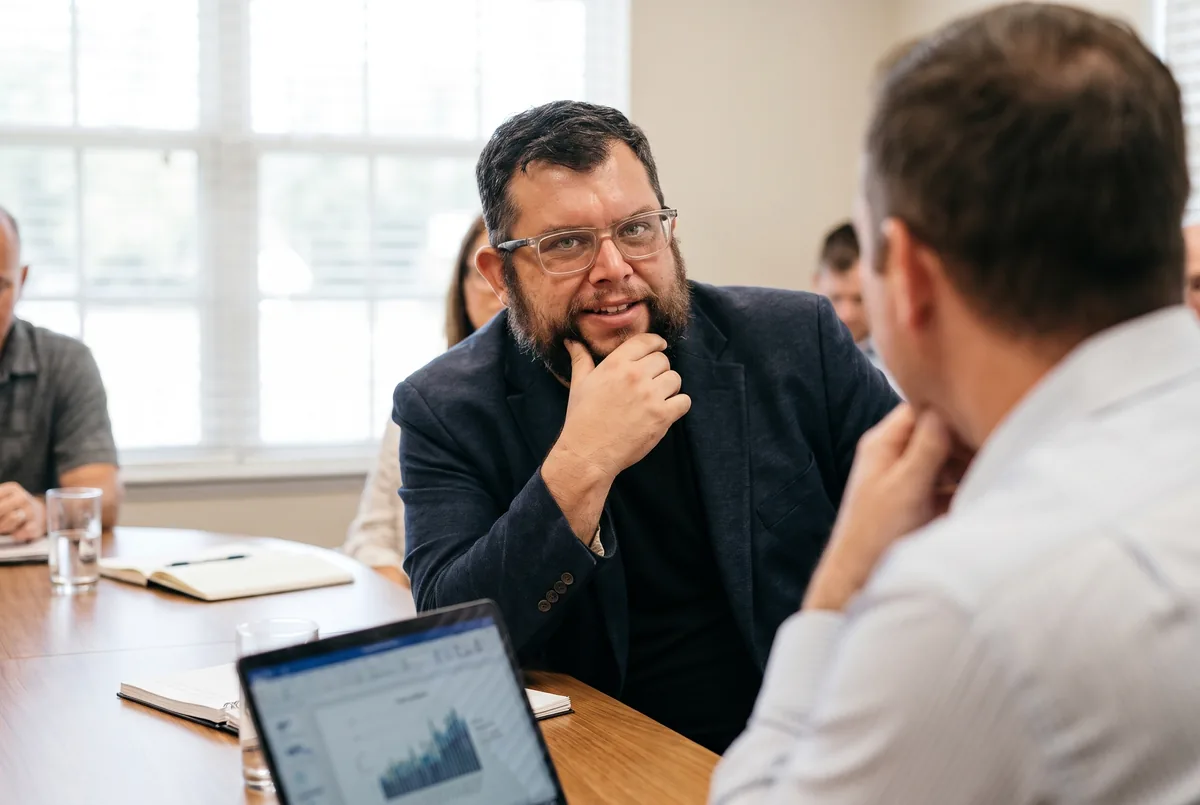
Talk it through with the fractional CMO who runs it.
See if Mark has availability for a callFree. 30 minutes. With Mark, not a salesperson.
Reach the customers beyond South Dakota
Book a free 30-minute call with Mark Gabrielli. Bring your top out-of-state markets and how deals start today, and leave with the first moves worth making.
Book a free strategy call →